My psychotherapeutic approach is primarily based on a humanistic, trauma-sensitive
view of mankind. Studies have long shown that the most powerful factor in the
success of psychotherapy is neither therapy method nor experience - rather the
relationship - the experience of being seen and heard from one human being to
another - has proven to be the most vital factor. The following principles are central to
my work:
•
True listening creates regulation and connection with the other person.
•
Connection to your own body enables energy flow, regulation, and integration.
•
Everything works better when you are relaxed.
•
Every moment offers an opportunity to get in touch with yourself and practice
self-acceptance.
•
Following the body's signals leads the way to the natural core self.
Trust in the Body's Innate Wisdom and Healing Powers
My therapeutic stance is shaped by the conviction that our mind, psyche, body, and
nervous system are best at healing themselves. This might sound sarcastic to some:
Why am I not already healthy and feeling great? Believing in the body's self-healing
powers does not mean that we don't need support. In fact, burden and stress are
usually accompanied by a disconnection from the self. As a result, the brain lacks vital
signals from the body, and blocked emotional energy can no longer flow freely.
A compassionate presence and a safe space where one can truly be oneself are the
prerequisites for rediscovering and reviving this lost connection. Depending on one’s
past experiences, it can take time to build trust in another person and in one’s own
body.
My trust in the body’s wisdom is rooted in years of personal therapy and self-
experience across a wide range of modalities, including Gestalt Therapy, EMDR,
NARM, Somatic Experiencing, Shiatsu, Neurofeedback, Feldenkrais, Craniosacral
Therapy, and Rolfing. It is also firmly grounded in the humanistic tradition, which I
encountered during my Gestalt training and which forms the heart of my therapeutic
approach. To me, a humanistic approach means meeting the patient as an equal and
showing up as a whole person, both in touch with my vulnerabilities and strengths. I
meet my clients as I would wish to be met: with respect, curiosity, appreciation, and
human dignity.
Methods used to support the self-healing
In the following list of used methods, I would like to point out the extent to which they
incorporate the element of self-healing:
Gestalt therapy
Gestalt therapy is based on humanistic values and is rooted in the tradition of
mindfulness, psychoanalysis, and Gestalt theory. The latter posits, among other
things, that an 'open Gestalt' strives for completion. This implies that systems are self-
organizing as long as an exchange—or connection—is possible. These systems can be
social groups or the organism itself. Accordingly, Gestalt therapeutic interventions
include those that promote exchange between systems. To achieve this, elements of
the system are often symbolized so they can be observed from outside the
person—for example, through chair work or identification with a symbol. In this way,
feelings, needs, child or adult parts, and much more can be represented. In this
exchange, emphasis is placed on allowing these elements to express what feels most
important to them. The therapist may suggest experiments so that missing, split-off,
or underdeveloped aspects can be experienced and integrated. The patient is invited
into these experiments and ultimately decides for themselves what resonated
internally and what value it holds. The central element in Gestalt therapy is
contact—another word for connection.
Somatic Experiencing
Somatic Experiencing is a body-based trauma therapy method that uses primarily a
bottom-up aproach. This means that sensorimotor and emotional information
originating from the body and the senses are central to the processing of stress and
trauma. We all know that anxiety and trauma do not disappear just by cognitive
processing. Research has demonstrated that traumatic memories are primarily stored
in implicit procedural memory, consisting of sensory, emotional, and interoceptive
information. Peter Levine’s core principle is that trauma symptoms resolve when
unfinished defensive responses can be brought to completion. The essence of trauma
is, after all, the inability to defend oneself and being overwhelmed. To track these
instinctive reactions, one must follow the inner trail noticing the subtle signals of the
bodily system and giving them the space to unfold naturally. In other words, much like
in NARM, it is about locating blocked life energy and allowing it to flow again. In this
way, trauma can be naturally discharged and transformed - similar to how it occurs in
the animal kingdom - and the bound energy becomes available to the organism once
more and homeostasis is restored.
NARM (neuro-affective relational model)
NARM is a psychotherapeutic approach specifically designed for developmental
trauma, building upon the principles of Somatic Experiencing and Gestalt therapy,
among others. It assumes that we are born with full vitality and life energy, but that
during our development, we adapt to our environment and our parents in ways that
diminish this natural life force. NARM supports clients in rediscovering their own
natural vitality - for it lies within us and can never be truly lost. When we are
connected to this life force, conflicts, tensions, and symptoms often resolve on their
own. In reality, this process should be envisioned as a gradual one: it is about
reaching a state where our body is optimally connected to its resources and the
environment - a state Porges calls the ventral-vagal state. Since life is not static, our
states are also dynamic and do not last indefinitely. However, the more often an
individual experiences this state of connection, safety, and inner peace, the more this
neural network is strengthened and the easier to move into it. This, in turn, solidifies
one's trust in their self-healing powers and a positive belief in one-self and the world
around us.
EMDR (eye movement desensitization and reprocessing)
EMDR is a trauma therapy method in which bilateral stimulation signals to the brain
that it should begin processing now, without dictating how that processing should
occur. The guiding principle is that the process works best the less the therapist (or
the client) intervene. This approach relies on the trust that the brain will process
exactly what is most important in the moment, in the specific way that is best. It is
fascinating to witness how overwhelming experiences are transformed into processed
memories in this way and how the brain draws on its own resources during this
process.
A note about body therapy and touch
If you go to a psychotherapist, you expect to have conversations sitting down without
any touch. My body-oriented training and own experience with various body
therapeutic methods in recent years have brought me ever closer to the body.
Through the scientific and personal research of the functioning and evidence of body
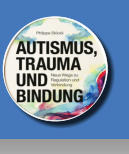
therapy - which ultimately lead to me writing a book about it - I have realized, among
other things, that access to certain topics and problems is hardly possible through
traditional talk therapy, e.g. early developmental trauma, experiences of early neglect
or near-death experiences.
I therefore offer a body-oriented approach with or without touch, if you wish and if
there is sufficient mutual trust. This offer is an extension of my previous
psychotherapeutic approach.
Therapeutic Stance and Core Values
“Everything we are looking for is already in us”
Practice for psychotherapy & trauma therapy
Dr. Phil Stöckli, PhD



More about my specializations
•
Gestalt therapy
•
Trauma therapy
•
Somatic Experiencing
•
Autism spectrum
•
Assessments
•
High sensitivity (HSP)
•
EMDR
•
NARM




Impressum
Psychotherapeutische Praxis
Dr. phil. Philippe Stöckli
Gemeindestrasse 26 | 8032 Zürich
Tel. 076 282 8885














Store
Cupidatat voluptate
Ut adipisicing, in cillum
cupidatat voluptate esse
$0.00
Practice for Psychotherapy & Counseling
Dr. Phil Stöckli , ph.D.
Gemeindestr. 26 | 8032 Zürich
Tel. 076 282 8885
Practice for Psychotherapy
Dr. Phil Stöckli, PhD
Therapeutic Stance and Core Values
“Everything we are looking for
is already in us”
My psychotherapeutic approach is primarily based
on a humanistic, trauma-sensitive view of mankind.
Studies have long shown that the most powerful
factor in the success of psychotherapy is neither
therapy method nor experience - rather the
relationship - the experience of being seen and
heard from one human being to another - has
proven to be the most vital factor. The following
principles are central to my work:
•
True listening creates regulation and
connection with the other person.
•
Connection to your own body enables energy
flow, regulation, and integration.
•
Everything works better when you are relaxed.
•
Every moment offers an opportunity to get in
touch with yourself and practice self-
acceptance.
•
Following the body's signals leads the way to
the natural core self.
Trust in the Body's Innate Wisdom and Healing
Powers
My therapeutic stance is shaped by the conviction
that our mind, psyche, body, and nervous system
are best at healing themselves. This might sound
sarcastic to some: Why am I not already healthy
and feeling great? Believing in the body's self-
healing powers does not mean that we don't need
support. In fact, burden and stress are usually
accompanied by a disconnection from the self. As a
result, the brain lacks vital signals from the body,
and blocked emotional energy can no longer flow
freely.
A compassionate presence and a safe space where
one can truly be oneself are the prerequisites for
rediscovering and reviving this lost connection.
Depending on one’s past experiences, it can take
time to build trust in another person and in one’s
own body.
My trust in the body’s wisdom is rooted in years of
personal therapy and self-experience across a wide
range of modalities, including Gestalt Therapy,
EMDR, NARM, Somatic Experiencing, Shiatsu,
Neurofeedback, Feldenkrais, Craniosacral Therapy,
and Rolfing. It is also firmly grounded in the
humanistic tradition, which I encountered during
my Gestalt training and which forms the heart of
my therapeutic approach. To me, a humanistic
approach means meeting the patient as an equal
and showing up as a whole person, both in touch
with my vulnerabilities and strengths. I meet my
clients as I would wish to be met: with respect,
curiosity, appreciation, and human dignity.
Methods used to support the self-healing
In the following list of used methods, I would like to
point out the extent to which they incorporate the
element of self-healing:
Gestalt therapy
Gestalt therapy is based on humanistic values and
is rooted in the tradition of mindfulness,
psychoanalysis, and Gestalt theory. The latter
posits, among other things, that an 'open Gestalt'
strives for completion. This implies that systems
are self-organizing as long as an exchange—or
connection—is possible. These systems can be
social groups or the organism itself. Accordingly,
Gestalt therapeutic interventions include those
that promote exchange between systems. To
achieve this, elements of the system are often
symbolized so they can be observed from outside
the person—for example, through chair work or
identification with a symbol. In this way, feelings,
needs, child or adult parts, and much more can be
represented. In this exchange, emphasis is placed
on allowing these elements to express what feels
most important to them. The therapist may
suggest experiments so that missing, split-off, or
underdeveloped aspects can be experienced and
integrated. The patient is invited into these
experiments and ultimately decides for themselves
what resonated internally and what value it holds.
The central element in Gestalt therapy is
contact—another word for connection.
Somatic Experiencing
Somatic Experiencing is a body-based trauma
therapy method that uses primarily a bottom-up
aproach. This means that sensorimotor and
emotional information originating from the body
and the senses are central to the processing of
stress and trauma. We all know that anxiety and
trauma do not disappear just by cognitive
processing. Research has demonstrated that
traumatic memories are primarily stored in implicit
procedural memory, consisting of sensory,
emotional, and interoceptive information. Peter
Levine’s core principle is that trauma symptoms
resolve when unfinished defensive responses can
be brought to completion. The essence of trauma
is, after all, the inability to defend oneself and
being overwhelmed. To track these instinctive
reactions, one must follow the inner trail noticing
the subtle signals of the bodily system and giving
them the space to unfold naturally. In other words,
much like in NARM, it is about locating blocked life
energy and allowing it to flow again. In this way,
trauma can be naturally discharged and
transformed - similar to how it occurs in the animal
kingdom - and the bound energy becomes
available to the organism once more and
homeostasis is restored.
NARM (neuro-affective relational model)
NARM is a psychotherapeutic approach specifically
designed for developmental trauma, building upon
the principles of Somatic Experiencing and Gestalt
therapy, among others. It assumes that we are
born with full vitality and life energy, but that
during our development, we adapt to our
environment and our parents in ways that diminish
this natural life force. NARM supports clients in
rediscovering their own natural vitality - for it lies
within us and can never be truly lost. When we are
connected to this life force, conflicts, tensions, and
symptoms often resolve on their own. In reality,
this process should be envisioned as a gradual
one: it is about reaching a state where our body is
optimally connected to its resources and the
environment - a state Porges calls the ventral-vagal
state. Since life is not static, our states are also
dynamic and do not last indefinitely. However, the
more often an individual experiences this state of
connection, safety, and inner peace, the more this
neural network is strengthened and the easier to
move into it. This, in turn, solidifies one's trust in
their self-healing powers and a positive belief in
one-self and the world around us.
EMDR (eye movement desensitization and
reprocessing)
EMDR is a trauma therapy method in which
bilateral stimulation signals to the brain that it
should begin processing now, without dictating
how that processing should occur. The guiding
principle is that the process works best the less the
therapist (or the client) intervene. This approach
relies on the trust that the brain will process
exactly what is most important in the moment, in
the specific way that is best. It is fascinating to
witness how overwhelming experiences are
transformed into processed memories in this way
and how the brain draws on its own resources
during this process.
A note about body therapy and touch
If you go to a psychotherapist, you expect to have
conversations sitting down without any touch. My
body-oriented training and own experience with
various body therapeutic methods in recent years
have brought me ever closer to the body. Through
the scientific and personal research of the
functioning and evidence of body therapy - which
ultimately lead to me writing a book about it - I
have realized, among other things, that access to
certain topics and problems is hardly possible
through traditional talk therapy, e.g. early
developmental trauma, experiences of early
neglect or near-death experiences.
I therefore offer a body-oriented approach with or
without touch, if you wish and if there is sufficient
mutual trust. This offer is an extension of my
previous psychotherapeutic approach.





More about my specializations:
Gestalt therapy
Trauma therapy
Somatic Experiencing
Autism spectrum
Assessments
High sensitivity (HSP)
EMDR
NARM